| Renefer (1879-1957) by MG.Thierry |
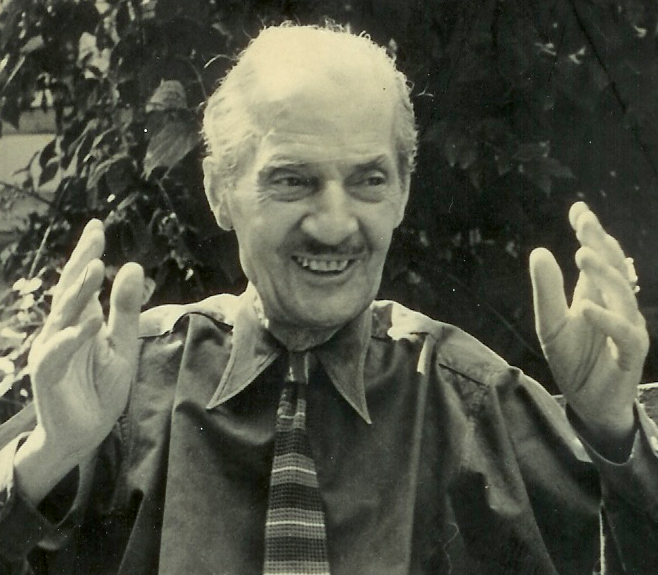 Raymond
Fontanet was born in June, 1879 in Bétheny (a village near Reims in France's Marne department). He studied architecture before enrolling at the school of
fine arts in Paris, where he began signing his work as Renefer. At 16, he decided to draw images from nature. He successively learned engraving,
water colors and oil painting. He illustrated a condiderable number of
books, including Mon frère Yves, by Pierre Loti,
Colette'sLa Vagabonde;Dix sept histoires de
marins, by Claude Farrère.
 Press illustrations also became one of his specialties. In 1905, an entire
issue of L'Assiette au Beurre carried his
illustrations on the theme "the great emotions". Renefer also worked for
book publishers, especially Flammarion, where he was in charge of art
books during the 1920s.
Press illustrations also became one of his specialties. In 1905, an entire
issue of L'Assiette au Beurre carried his
illustrations on the theme "the great emotions". Renefer also worked for
book publishers, especially Flammarion, where he was in charge of art
books during the 1920s. The head of a drawing and painting school, he wrote many texts on art. 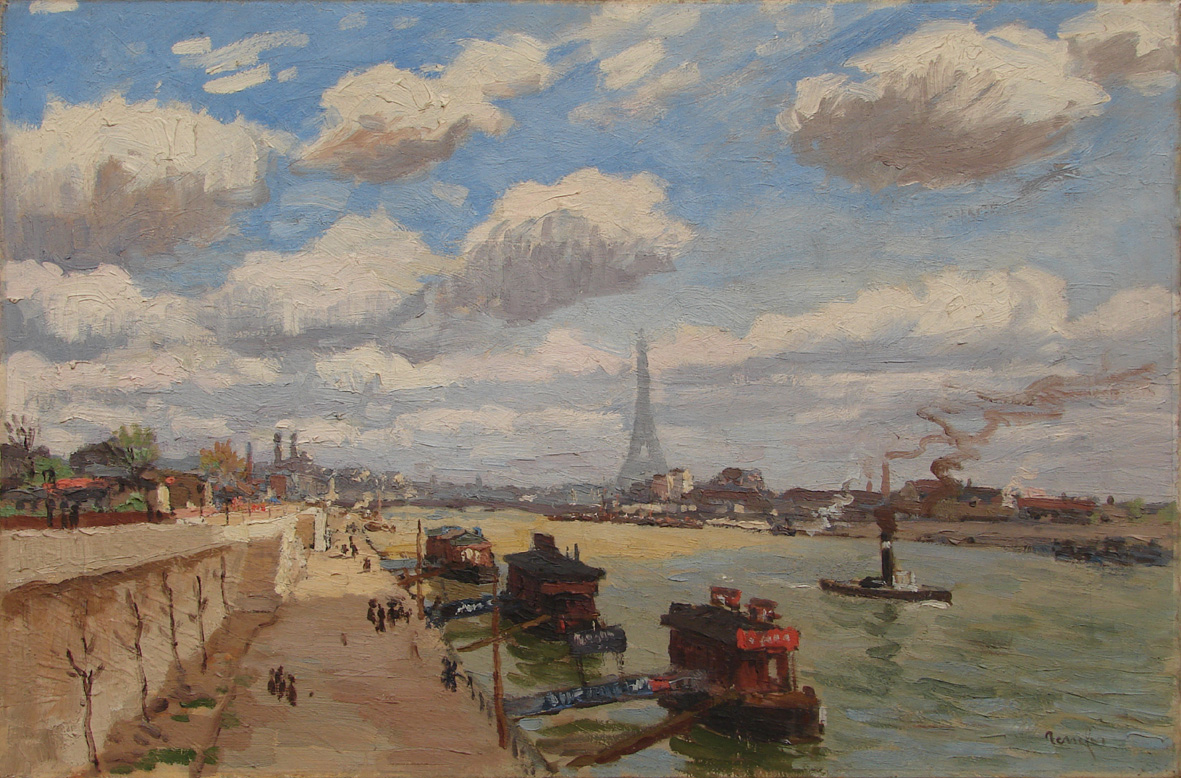 Starting in 1900, in Paris' seventh arrondissement and then Montmartre, he made drawings of daily life in the Capital. When he took up a paintbrush, he opted for cityscapes where water is often an important feature: the bridges of Paris, the Seine and the canals, rainy streets, etc. Contemporary critics awarded him the title "painter of air and water" and compared him to Marquet and Corot. As well as enjoying many exhibitions and a successful career, Renefer was an active member of the leadership of the Salon des Indépendants (along with Paul Signac and Maximilien Luce). He followed no fashion and never let himself pigeonholed as a member of a particular group or exponent of any pictorial formula. During Word War 1, Renefer was drafted into the first engineering regiment in 1914 at age 35. His job was to sketch the topography of battlefields to aid planning for accurate artillery barrages. He was a member of the Topographic Section of the 72nd Infantry Division (S.T.D.I 72). Starting 21 February, 1916, Renefer took part in the Battle of Verdun. Beginning on July 6 of the same year, he participated in the Battle of the Somme. He received the War Cross for "repeatedly carrying out dangerous reconnaissance missions in the areas of La Woevre, Champagne, l'Oise and l'Aisne, proceeding to the most exposed spots of his own accord in order to carry out his duties and make the required drawings" In the 1930s, he settle in Andrésy in Yvelines, where he lived until his death in 1957. There, he walked along the banks of the Seine to find the blues, greens and browns of these landscapes that he captured on canvas. His vacations were spent, paintbrush in hand, at the shore, especially in Brittany (Quimper, Loctudy and so on). As a landscape artist he was discret and preferred to avoid the world and fame. His considerable body of work includes thousands of drawings, watercolours, engravings and paintings scattered among private collections and museums. A complete catalogue of his work will be published to help revive the reputation the artist richly deserves. 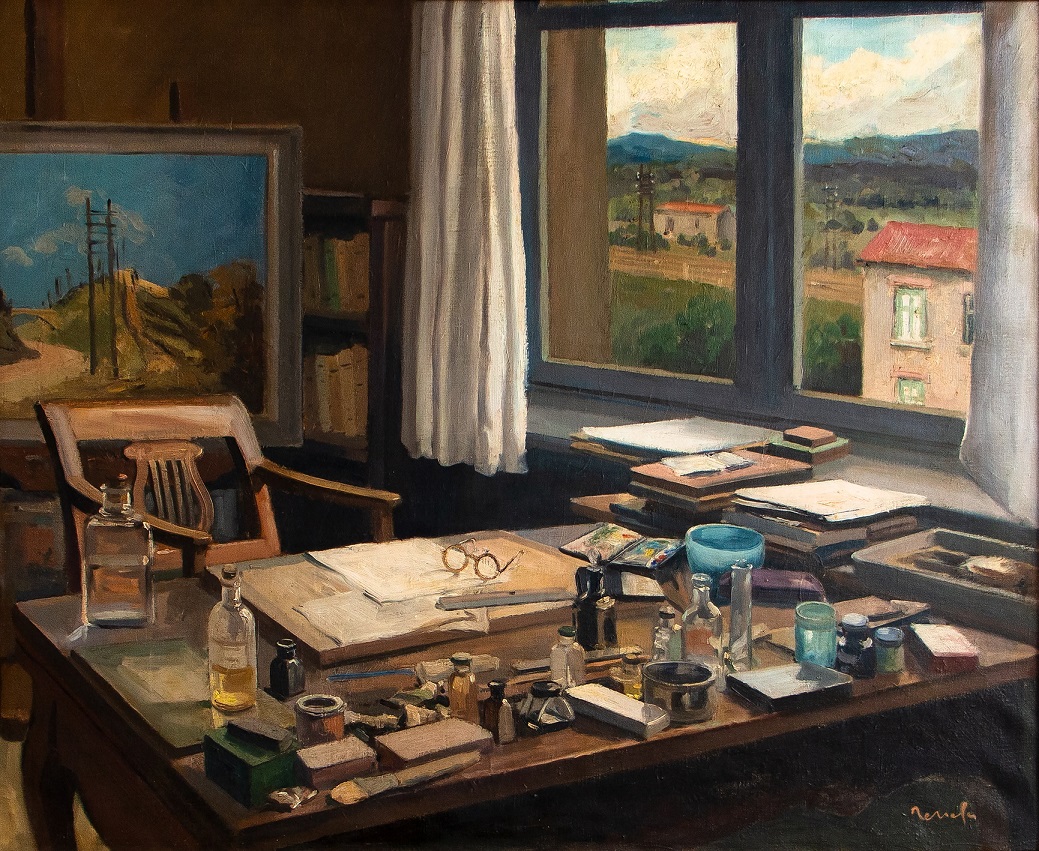
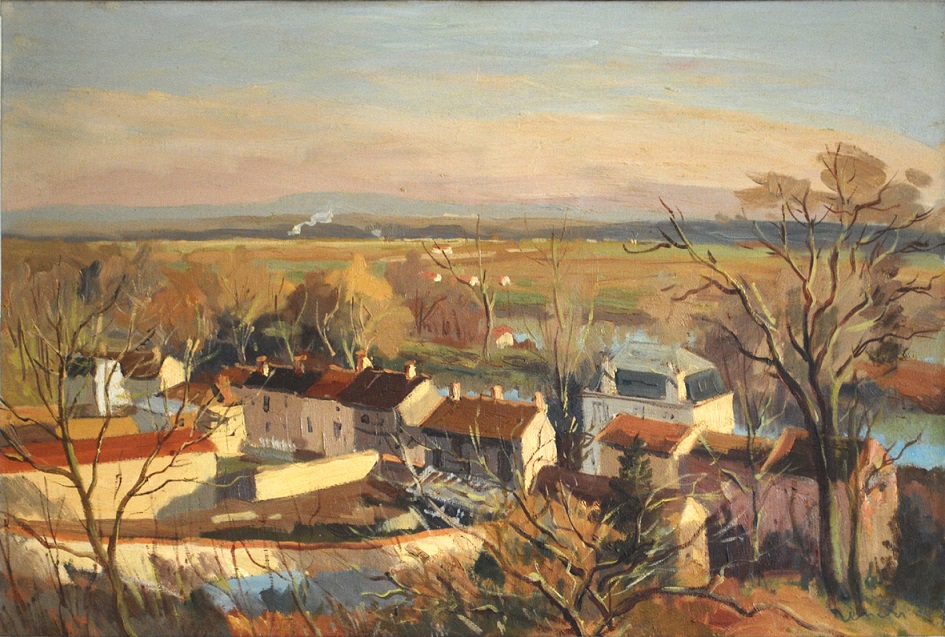
- The artiste'Studio, Andrésy front of the train Station - The view from the garden, Andrésy on the Seine, Achères'plain, with the train from Paris 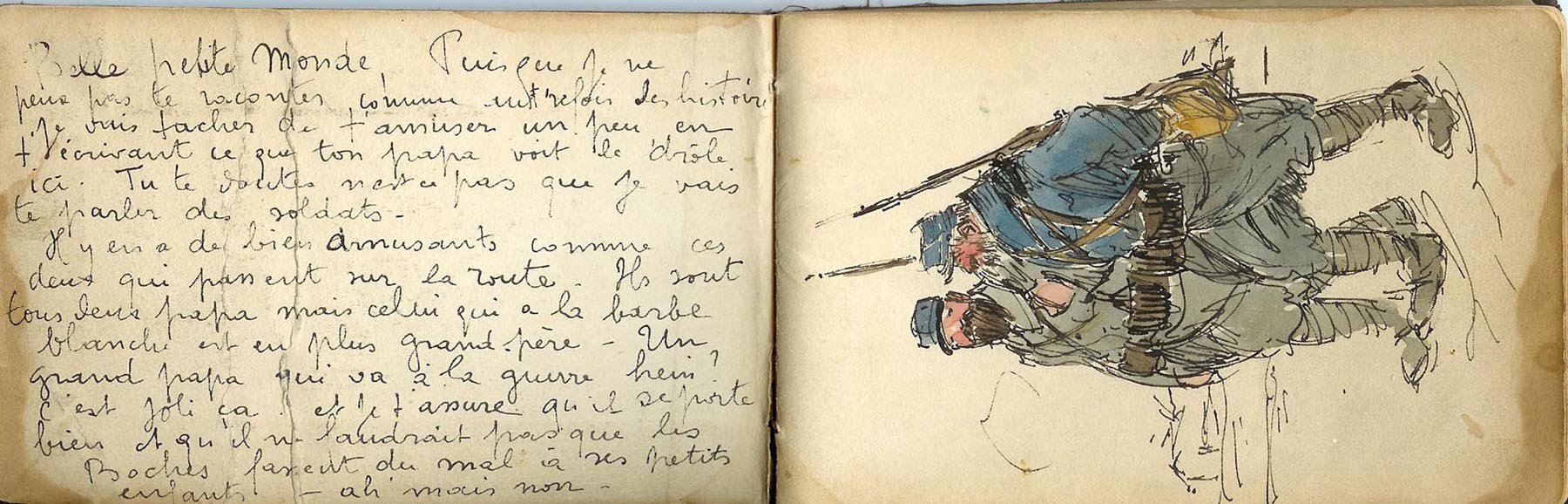
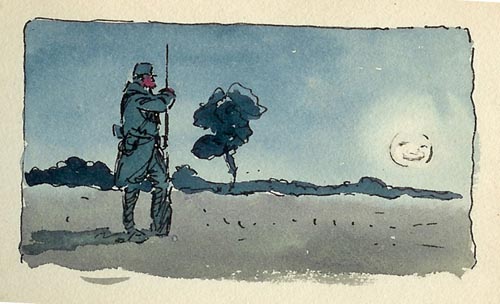
- Double Page from the War's booklet wrote by Renefer to his daughter Belle Petite Monde |
| Research |
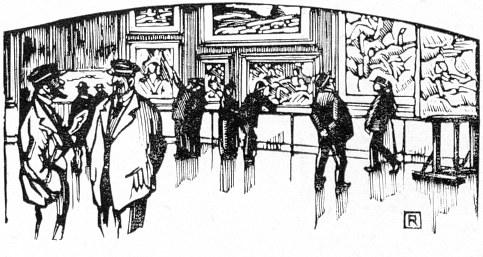
* A catalogue raisonné is a complete and annotated listing of the works of a particular artist. It provides information such as title,medium, size, owner, gallery, collection, and/or exhibition. It includes details about the provenance and present condition of each work. |